ServicesHardscape Installation
Hardscape Installation in Winter Garden
We build patios, walkways, seating walls and paver borders that stay flat and drain right. Before you pick a surface, we lay out what pavers, travertine and poured concrete each do well, where they fall short, and what that means for your home and budget.
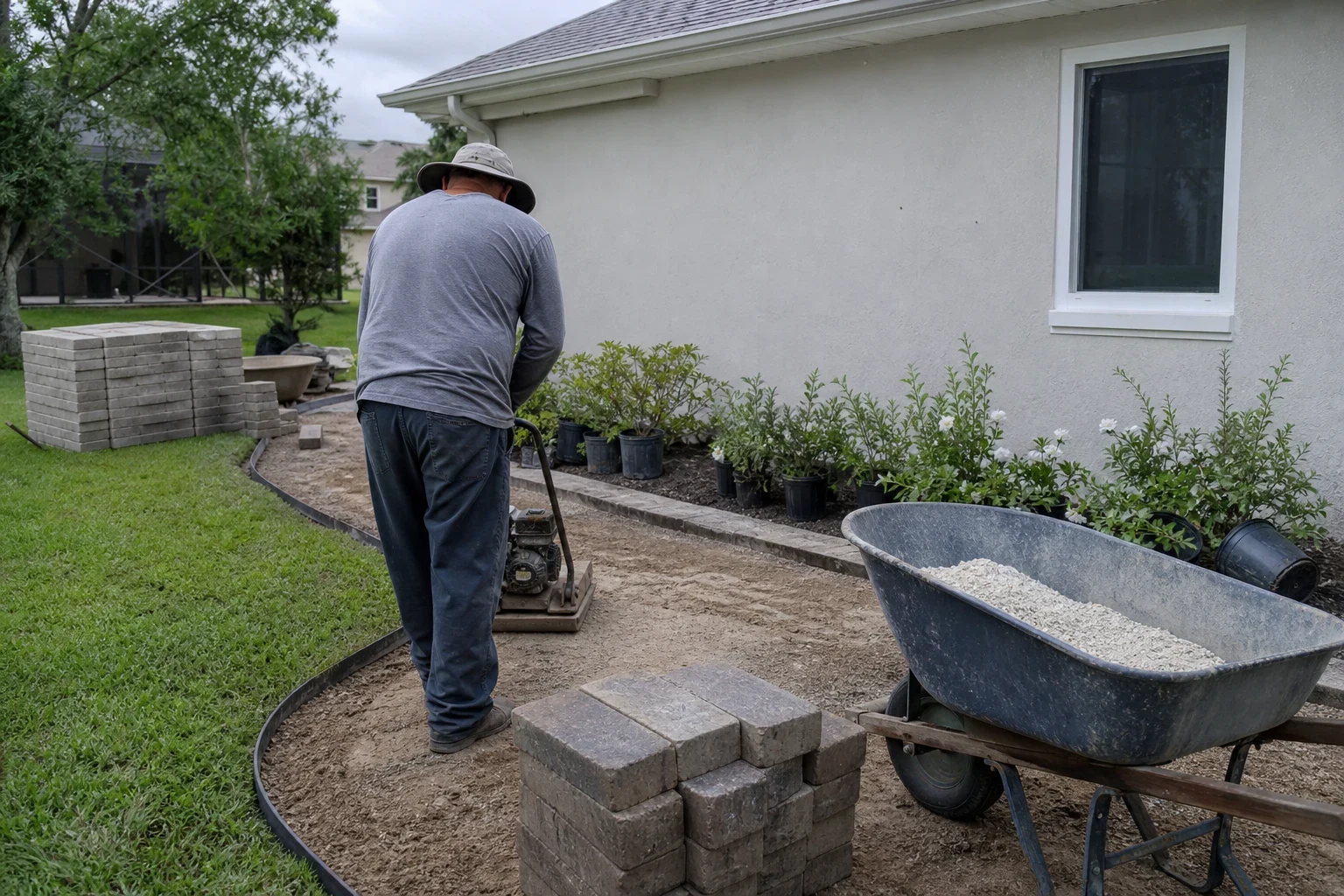
Stone and Concrete That Holds Up Outside Your Home
Hardscape is the hard part of the yard. Patios, paths, steps, garden walls, fire pit pads and the edging that keeps beds in place. Done well, it gives you usable space that does not need mowing or watering.
Most problems we see come from what is under the surface, not the stone on top. Sandy soil shifts when it is not compacted. Heavy summer rain washes out joints and base if the slope is wrong. So we spend real time on the base, the pitch and the edges, then talk options.
Every option has trade-offs. Concrete pavers are easy to repair one piece at a time. Travertine stays cooler under bare feet but costs more and is softer. Poured concrete is the lowest upfront cost but tends to crack and is hard to patch cleanly. We will tell you which fits the way you use the space.
What the Work Includes
Samples in your yard
We bring samples or show you finished examples of pavers, travertine and concrete finishes. You see the color in daylight and feel the texture before deciding.
Layout and grading
We mark the footprint, set the height against your slab and doors, and pitch the surface away from the house so water runs off instead of pooling.
Excavation and compacted base
We dig out the soft soil and roots, then build up a crushed stone base in layers, compacting each one. This step is what keeps a patio flat years later.
Laying and cutting
Pavers or travertine go down on a screeded sand bed, with clean cuts at curves and edges. Patterns like herringbone help the surface resist shifting where people walk most.
Edge restraint and joint sand
A buried edge keeps the field from spreading. We sweep in polymeric sand, which hardens and slows weeds and ant hills between pavers.
Low walls and borders
Seating walls, raised bed walls and paver borders around mulch beds, built with a footing and drainage behind them so they stay straight.
Signs It Is Time for New Hardscape
Sinking or rocking pavers
Low spots and loose pieces usually mean the base was thin or never compacted. Sometimes we can lift and relay a section. Sometimes the whole area needs a new base.
Cracked concrete patio
Cracks that widen or lift at the edges are a trip hazard. Covering old concrete with pavers or replacing it outright are both options we can price for you.
Water sitting near the house
If rain puddles against your slab or back door, the patio pitch is likely wrong. New hardscape can fix the slope and carry water away.
Worn grass paths
A bare dirt track across the lawn tells you where people actually walk. A stepping stone or paver path there ends the mud.
Space you never use
A patch of yard too sunny, sandy or shaded for grass can turn into a sitting area or fire pit pad you will use.
How a Hardscape Job Runs
- 1
On-site walkthrough
We come out, measure, check the soil and drainage, and talk through how you want to use the space. You get your estimate as a written breakdown, free.
- 2
Pick the stone and check approvals
You choose the stone and pattern. If your neighborhood has an HOA or the project needs a permit, we sort out what is required before we start.
- 3
Dig and build the base
Day one is usually excavation and base work. It is loud and dusty for a few hours. We keep equipment on the path we agreed on and protect your lawn and irrigation heads where we can.
- 4
Lay, cut and finish
Stone goes down, edges get cut and locked, and joint sand is swept and set. Small patios often wrap up in a few days. Larger jobs with walls take longer.
- 5
Cleanup and walk-off
We haul away soil and scraps, rinse the surface and walk it with you. We point out how long to wait before heavy use and how to care for the joints.
What Moves the Price
Hardscape is priced by the job, not a flat rate per square foot. Two patios the same size can cost very different amounts, and the list below shows why. If you would rather pay over time, financing goes up to $100,000, with terms anywhere from 2 to 12 years and no prepayment penalties.
- Material choice
- Poured concrete costs least upfront. Concrete pavers sit in the middle. Travertine and natural stone cost the most to buy and take more care to cut and lay.
- Size and shape
- Square footage matters, but curves, steps and borders add cutting time and waste.
- Removing what is there
- Breaking out an old concrete slab and hauling it off adds labor and dump costs compared to an open patch of grass.
- Access and soil
- Tight side yards mean smaller equipment and more hand work. Soft or root-filled soil needs deeper digging and more base rock.
- Walls and drainage
- Seating walls, footings and drain lines behind or under the hardscape add block, stone and time.
Hardscape Questions We Get
Something not covered here? (407) 410-3813
Pavers or travertine for a pool deck or patio?
Travertine stays noticeably cooler under bare feet in summer, which matters around a pool. It is softer and more porous, so it can chip and benefits from sealing. Concrete pavers handle more wear, cost less and come in more colors. We show you both before you choose.
Can you lay pavers over my old concrete patio?
Sometimes. If the slab is solid, mostly level and the added height will not block a door or drainage, thin pavers can go right over it. If it is badly cracked or sinking, we recommend removing it. We will check it on the walkthrough and tell you straight.
Will weeds and ants come up between the pavers?
Polymeric sand in the joints cuts down on both a lot. It is not a permanent seal, so some topping up every few years is normal. A good base and edge restraint also keep joints tight.
Do I need a permit or HOA approval?
Many communities around Winter Garden have HOA rules on colors, styles and placement. Permit needs depend on the project, especially walls. We look into it during planning so there are no surprises later.
Will the work damage my sprinklers or lawn?
We mark irrigation heads and lines before we dig and reroute them if the patio covers them. Some grass along the edge will get disturbed. We can patch it, or lay fresh sod through our sod installation service where needed.
See the Stone Before You Decide
We will walk your yard, look at the soil and drainage, and show you what each option would cost and how it would wear. No pressure to sign that day.