ServicesPalm Tree Pruning and Removal
Palm Tree Pruning and Removal in Winter Garden
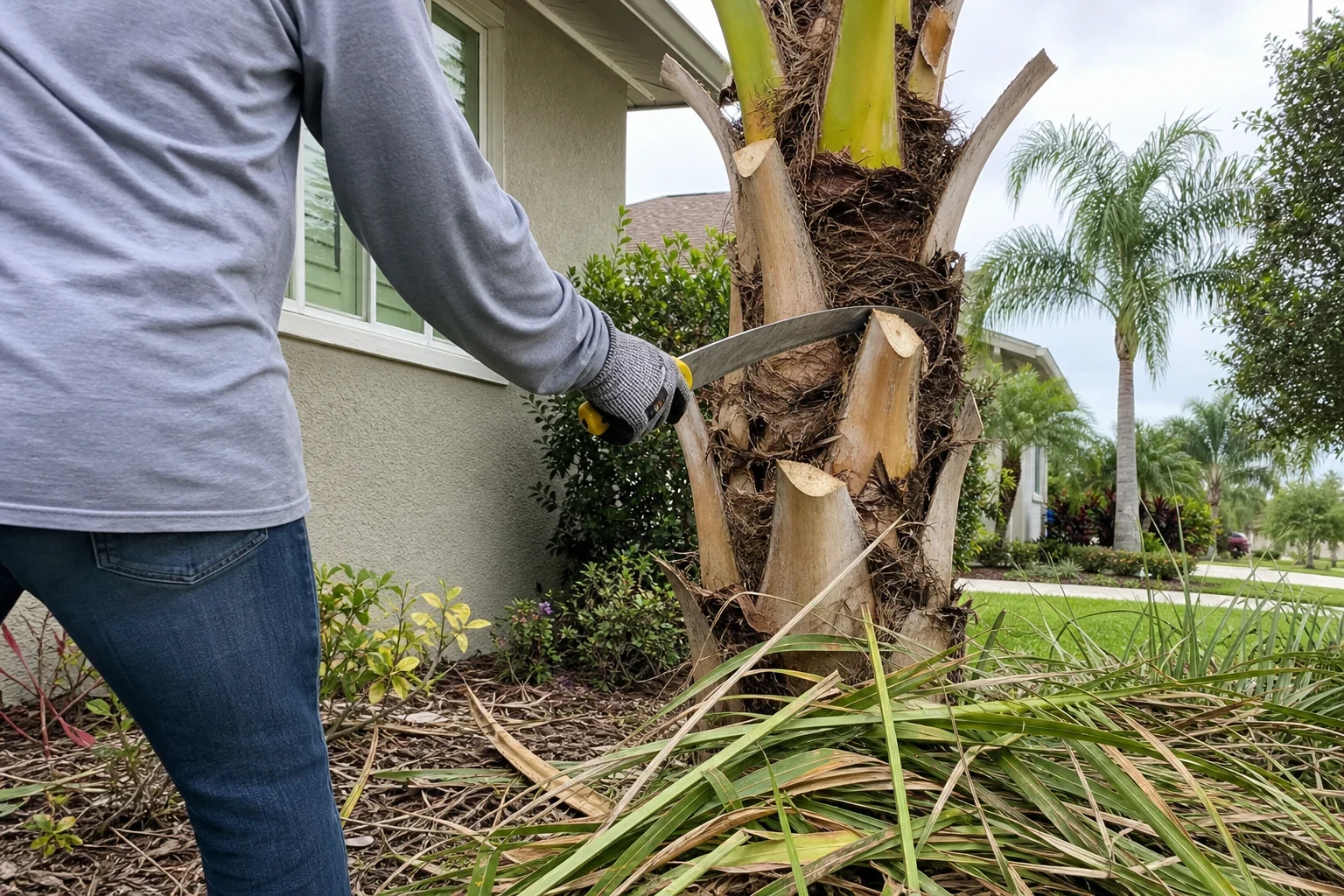
We cut the dead fronds, seed stalks and loose boots, and we leave the green crown that feeds the palm. When a palm is sick or in the wrong spot, we take it down cleanly and haul every piece away from your home.
Palms Need a Lighter Touch Than Other Trees
A palm grows from one bud at the top. It has no bark layer to heal over a cut, so every wound in the trunk stays for good. That changes how we prune. We remove fronds that are fully brown, plus flower and seed stalks, and we stop there.
The tall, skinny "hurricane cut" you see around town strips off green fronds the palm still uses for food. It can thin the trunk at the top and invite pests. A healthy palm with a full, rounded crown handles summer storms better than one cut down to a few spikes.
Different palms need different care. A sabal sheds old boots on its own over time. A queen palm drops heavy fruit and is quick to show nutrient problems. A Washingtonia grows tall fast and holds a skirt of dead fronds that should come off. We tell you what your palm is and what it actually needs.
What the Work Includes
- Dead and hanging fronds
- We cut fronds that are fully brown or hanging below the trunk. Fronds that are yellow but still partly green usually stay, since the palm is still pulling nutrients back out of them.
- Seed stalks and fruit
- Queen palms and date palms throw out big seed clusters. Cutting them before the fruit drops saves you sticky messes on the driveway and a yard full of seedlings.
- Boot cleanup
- The old leaf bases on a sabal or date palm can be trimmed for a cleaner trunk. We take off only the loose ones so we do not gouge the living trunk.
- Full palm removal
- We take down palms in sections when there is a roof, fence or pool nearby, or drop them whole when there is room. The trunk, crown and fronds all leave with us.
- Haul-off and raking
- Palm fronds are fibrous, sharp at the base and heavy in bulk. We load them out and rake the beds and lawn so you are not left with debris to bag.
Signs Your Palm Needs Attention
A skirt of brown fronds
Dead fronds hanging under the crown catch wind, hide rats and can drop on people or cars. They are an easy fix.
Conks or soft spots near the base
A shelf-like growth or soft, punky wood low on the trunk can point to Ganoderma butt rot. There is no cure for it, and an infected palm should come down before it falls.
Fronds browning from the top down
When the newest spear leaf dies or the whole crown turns a rusty bronze, the palm may have lethal bronzing or a failed bud. We look at it and give you a straight answer.
Frizzled or spotted new growth
Curled, stunted new fronds or yellow speckling on older ones usually mean a nutrient shortage. Cutting them off makes it worse, so we will tell you to feed the palm instead.
A palm too close to the house
Palms planted small near a roofline or pool cage often outgrow the spot. Fronds rub the shingles and fruit clogs the screen.
What Moves the Price
Most of the cost comes down to height, access and how much material we haul out. You see the number before any work starts, and if something changes on the day, we talk it through with you first. Pairing a removal with new plantings or a bigger yard project? You can borrow as much as $100,000, pay it back over anywhere from 2 to 12 years, and pay it off early without a penalty.
Height and species
A short pygmy date palm is a quick ladder job. A tall Washingtonia needs a lift and more time aloft.
Access to the palm
A palm in an open front yard is easier than one squeezed between a pool cage and a fence, where every piece has to be roped down.
Number of palms
Doing several palms in one visit costs less per palm, since setup and hauling are shared.
Removal and stump work
Taking down a palm costs more than pruning it, and grinding the stump is a separate line on the estimate so you can choose.
How a Palm Job Goes
- 1
Walkthrough and estimate
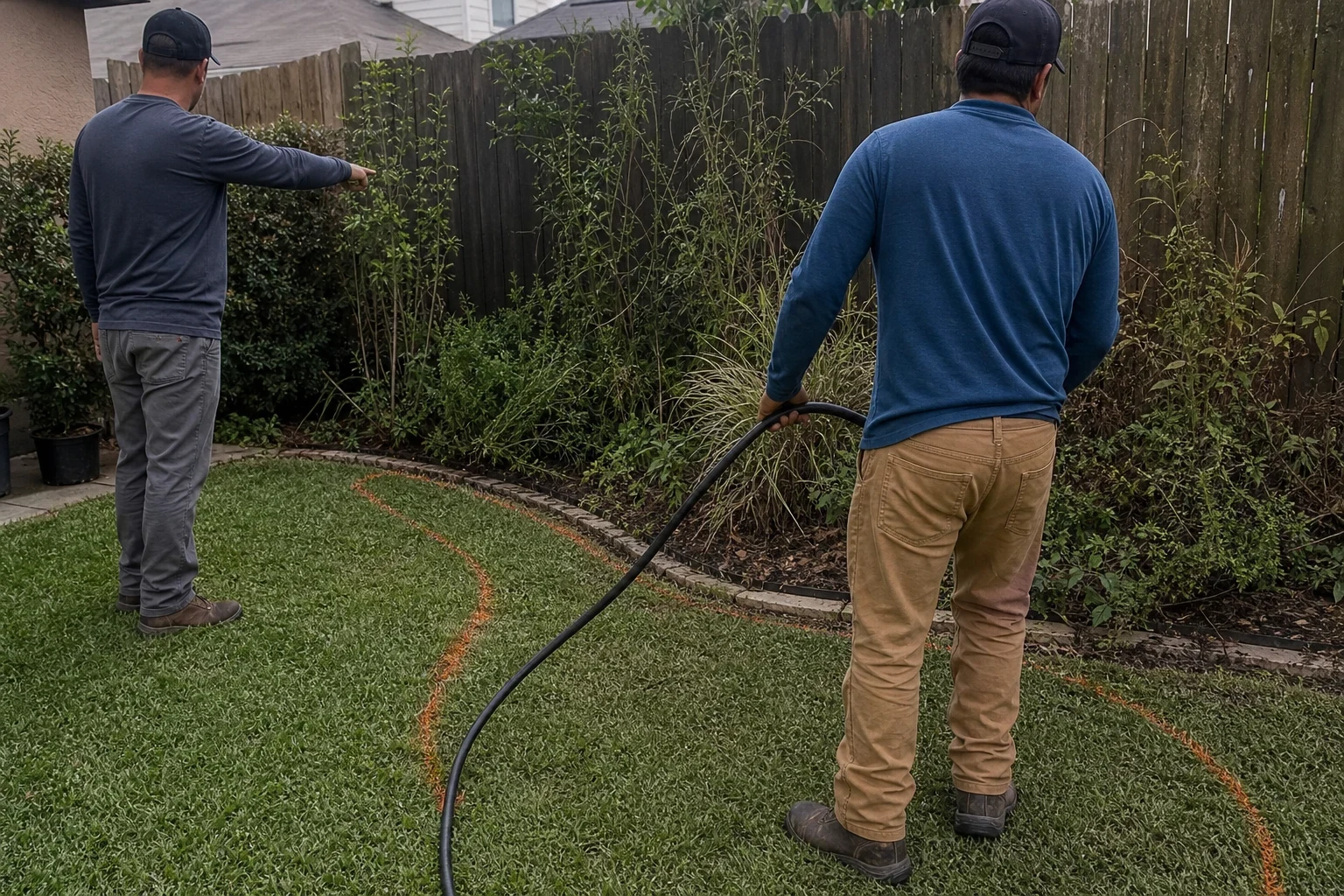
We come out, look at each palm and note the species, height and health. You get a free estimate that lists what we will cut and what we will leave.
- 2
Setting up the site
We park so we keep off soft lawn where we can, move outdoor furniture with you, and mark off a drop zone. Sprinkler heads near the work area get flagged.
- 3
Pruning or removal
We climb with a lift or ladder and ropes, not spikes, on any palm we are keeping. Spike holes never close in a palm. For removals we lower heavy sections on a line when there is anything below.
- 4
Cleanup and the stump
Everything gets hauled off and the area raked. If you want the stump gone too, our stump grinding service takes it below grade so you can plant or lay sod over it.
Palm Pruning and Removal Questions
How many times a year do palms need trimming?
Once a year covers most of the palms we work on. Queen and date palms that set a lot of fruit can use a second pass to get the seed stalks off before they drop. Cutting more often than that tends to take green fronds the tree is still feeding on.
Can you cut my palm short so it looks tidy longer?
We can, but we will tell you it is a bad trade. Removing green fronds starves the palm and can narrow the trunk. We aim to leave a crown that looks full, with no fronds cut above the horizontal line.
Will a palm stump grow back?
No. Palms have one growing point at the top, so once the trunk is cut, the stump will not sprout. It will slowly rot, which is why many people have us grind it out.
Should I trim before hurricane season?
Removing dead fronds and seed pods before the stormy months is smart, since that is the material that flies off in wind. Leave the green fronds. They help the palm flex and hold up in a storm.
Do you also handle oaks and other trees?
Yes. Hardwood trees are cut very differently from palms, and we cover that work on our tree trimming and removal page. We can price both on the same walkthrough.
Let Us Take a Look at Your Palms
We will walk your yard, tell you which palms need a trim, which are fine and which should come down. You get a clear estimate with no pressure to book.