ServicesLandscape Design
Landscape Design in Winter Garden
We draw up a plan for your yard that shows where every bed, plant and path goes, and what each one is made of. You see the trade-offs between mulch, stone and pavers before anything gets dug, so the yard you end up with is one you can actually keep up with.
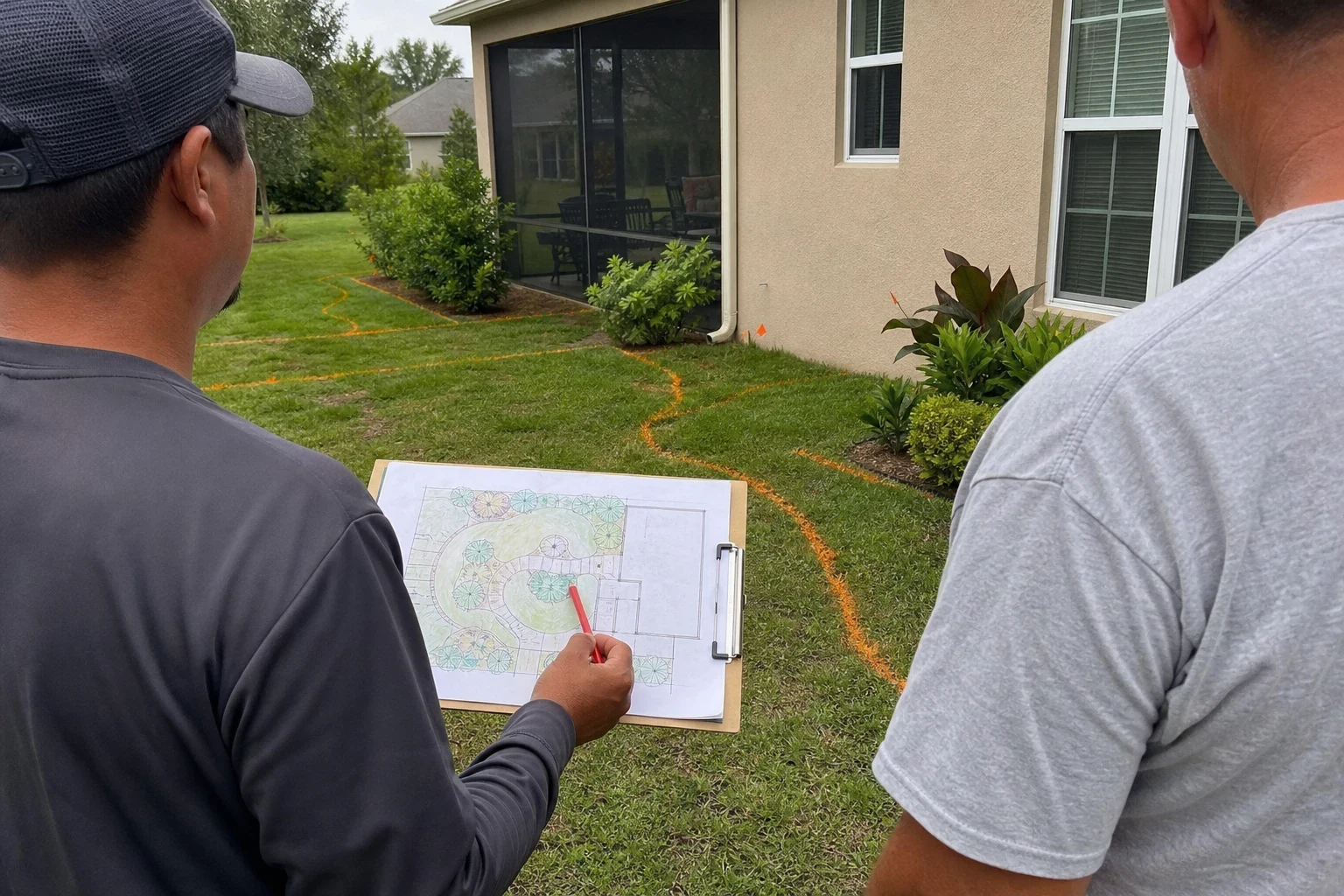
What Landscape Design Is and When It Makes Sense
Landscape design is the plan before the shovel. We look at your yard, ask how you use it and put it on paper: beds, plants, turf, edging, paths and where water needs to go. Then we talk through the materials for each piece, because that choice decides how the yard looks in five years and how much work it takes.
It is the right call when you are starting over, when a new home came with bare builder beds, or when you are tired of patching one problem at a time. In our heat and summer rain, a plant or mulch that looks fine at the nursery can struggle by August. A plan catches that early, while it is still cheap to change.
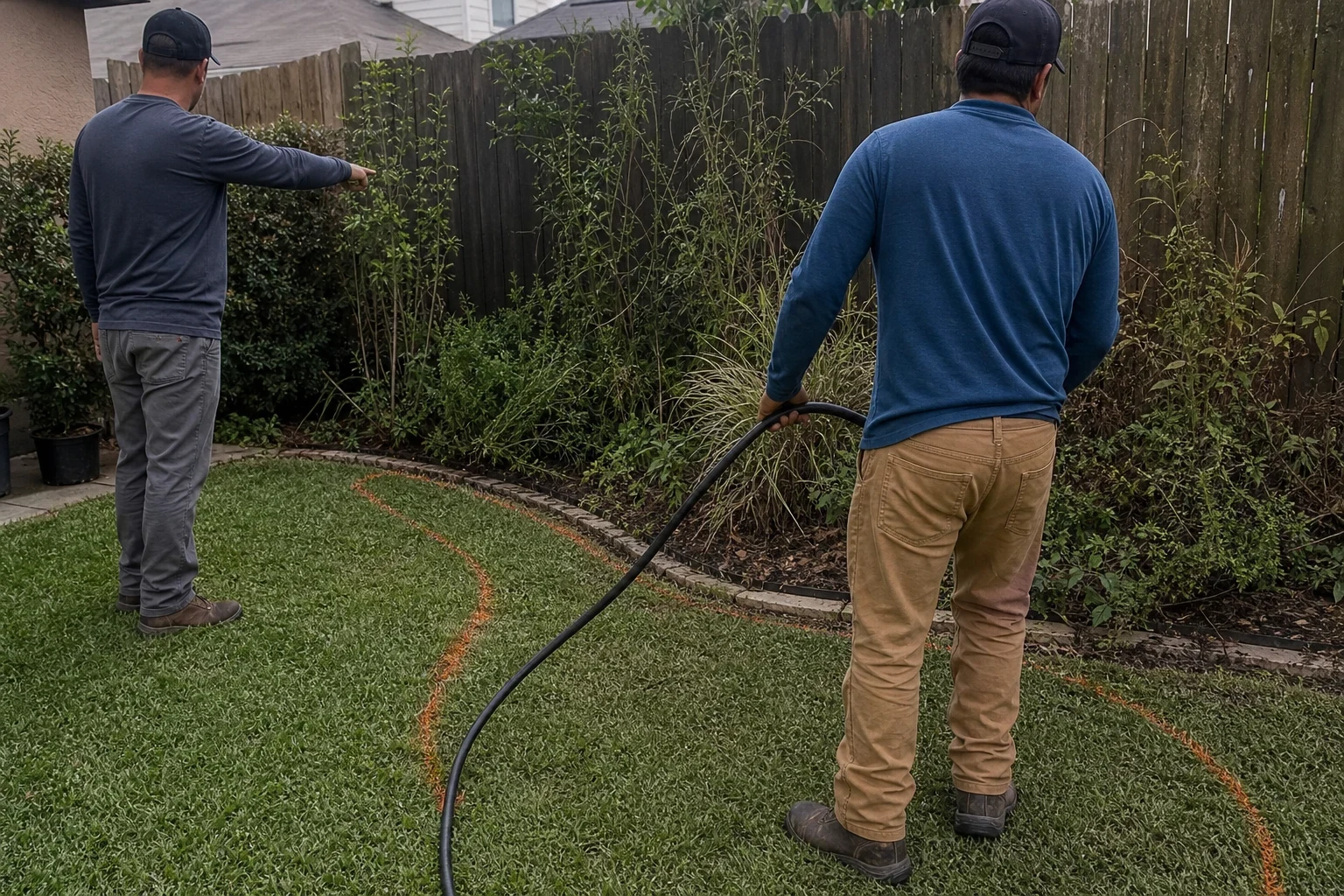
What You Get With a Design
- 01
A scaled layout
A drawing of your yard with beds, turf areas, paths and trees marked to size. You can see how it fits before money goes into the ground.
- 02
Plant list with sun and water notes
Each plant is picked for the spot it goes in: full sun, shade or the wet corner by the downspout. We note mature size so nothing swallows a window in three years.
- 03
Material choices side by side
Pine bark, pine straw, rubber mulch or river rock. Concrete pavers, travertine or poured concrete. We lay out what each costs to keep up, how it handles heat and rain, and where it fails.
- 04
Drainage and irrigation notes
We mark low spots, runoff paths and where sprinkler zones should split between turf and beds. If your system needs changes, that ties into our irrigation work.
- 05
A phased plan if you want one
Not everything has to happen at once. We can split the plan into stages so you can do the front yard this year and the back patio later.
Questions about Landscape Design?
Call(407) 410-3813Signs Your Yard Needs a Plan, Not Another Patch
Plants keep dying in the same spot
That spot usually gets more sun, more shade or more water than the plant can take. Putting the same plant back just starts the clock over.
Water pools after every storm
Standing water near the slab or in the beds means grading or bed layout is working against you. That gets worked out on paper first.
Beds look thin and weedy
Bare soil between small shrubs invites weeds. A design sets spacing and ground cover so the beds close up and shade the soil.
Builder landscaping is all you have
A few shrubs in a strip of rock along the foundation is a starting point, not a finished yard.
You spend weekends fighting it
If upkeep has gotten away from you, the fix is often fewer turf edges, tougher plants and a mulch that holds up longer.
How a Design Job Runs
- 1
Walk the property with you
We come out, walk the yard with you and take measurements. We look at sun, shade, soil, drainage and what is already worth keeping. You tell us how you use the space.
- 2
Draft the layout and options
We sketch the plan and put together choices for beds, paths and edging. Where there is a real decision to make, you get two or three options with plain pros and cons.
- 3
Go over it together
We sit down with the draft and change what does not fit. This is where you decide on materials, plant swaps and which phases come first.
- 4
Written estimate for the install
You get a line-item estimate for the work in the plan, so you can see what each piece costs. From there we can handle the install, including sod installation, mulch and beds, or hardscape installation.
What Moves the Cost of a Design
The design itself depends on how much yard we are planning and how detailed you want it. The bigger number is the install, and that is driven mostly by materials and the ground we are working with. We put every piece on a written estimate so nothing shows up later.
- Size of the area
- A front entry bed is a smaller job than the whole lot. More square footage means more measuring, more plants and more mulch or stone.
- Material picks
- Rock costs more up front than pine bark but does not need topping off each year. Travertine and pavers cost more than poured concrete but handle cracking and repairs better.
- Ground conditions
- Old roots, buried rock, poor drainage or a stump in the way add labor. If a stump needs to go, stump grinding gets added to the plan.
- Plant size at install
- Larger container sizes look finished on day one. Smaller plants cost less and take a season or two to grow out.
Landscape Design Questions
Do I have to use your crew for the install?
No. The plan is yours. Most people do have us install it since we already know the yard, but you can take it and do some of it yourself.
Which mulch holds up best here?
Pine bark looks natural and feeds the soil, but it breaks down and floats in heavy rain. Pine straw is light and cheap but needs refreshing more often. Rock lasts for years but holds heat, so it is hard on some plants. We match the mulch to the bed.
Can you work around trees and plants I already have?
Yes. We note what is healthy and worth keeping during the walkthrough and design around it. If a tree is crowding things out, tree trimming and removal can be part of the plan.
Can I pay for a big install over time?
Yes. Larger projects can be financed for amounts as high as $100,000, with terms anywhere from two to twelve years. If you want to pay it off early, there is no penalty for that. Bring it up on the phone or while we walk the yard and we will go over it.
How long until I see a plan?
It depends on the size of the yard and how many options you want to compare. We will give you a timeline when we walk the property so you know what to expect.
Start With a Walk Around Your Yard
We will come out, look at what you have and talk through the mulch, stone and plants that fit. The estimate is free and you get it by phone or on site.