ServicesIrrigation
Irrigation Services in Winter Garden
We fix and install sprinkler systems that put water where your lawn and beds need it and nowhere else. We check every zone, explain the parts we would use and why, and give you a written estimate before any digging starts.
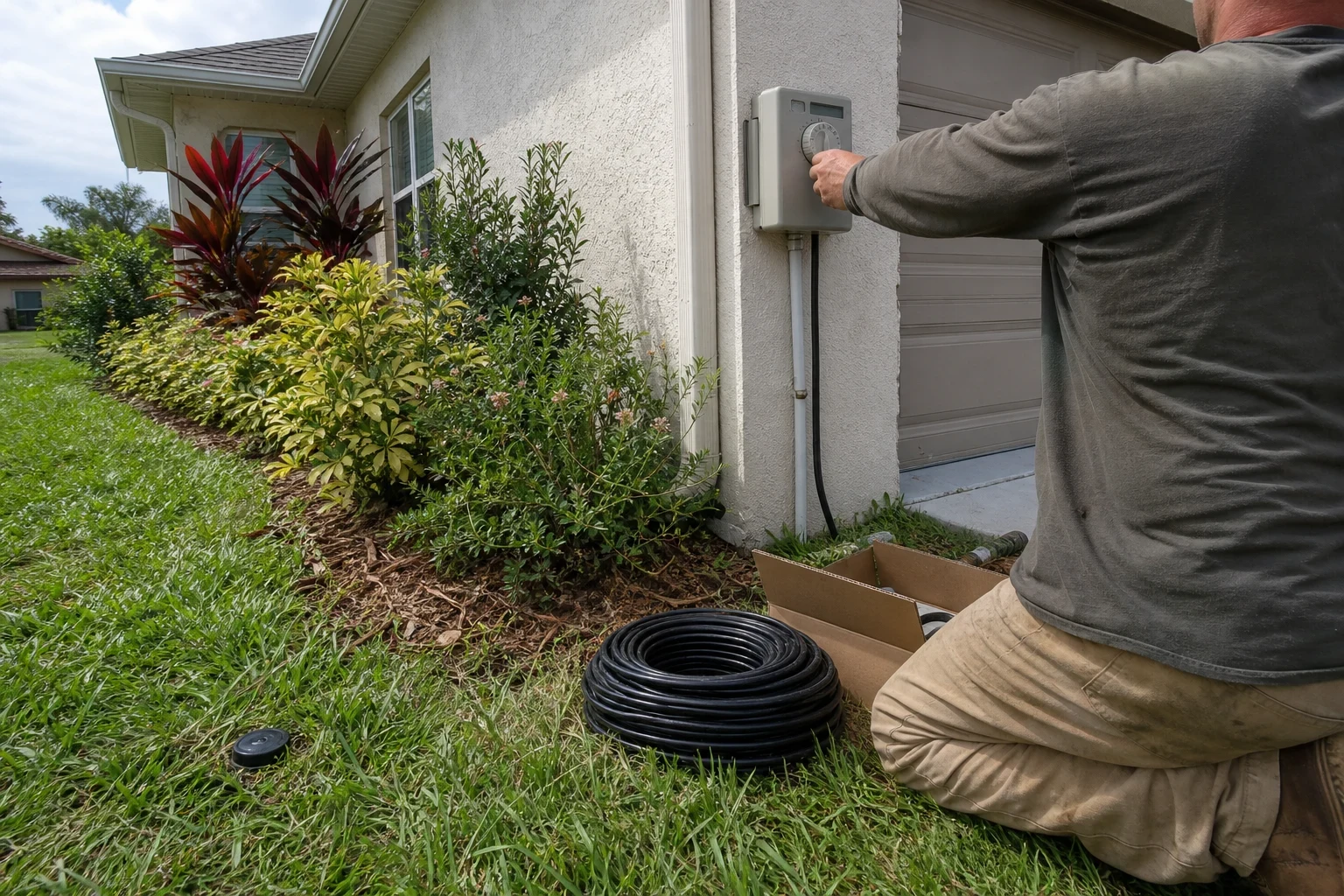
Water That Lands Where It Should
Most sprinkler problems are small. A head gets clipped by a mower, a nozzle clogs with sand, or a zone valve sticks open. Left alone, they turn into brown patches, soggy spots and a high water bill.
We handle irrigation repair, zone changes and new systems for your home. That means spray heads, rotors, drip lines, valves, pipe and the controller on the wall. Each part has its trade-offs, and we walk you through them in plain words so you know what you are paying for.
Sandy soil here drains fast, so short, even watering matters more than long soaks. A system set up for that keeps the grass green without wasting water.
What the Work Covers
- Spray heads vs. rotors
- Spray heads put out a lot of water fast and fit small, tight areas. Rotors throw a slow stream farther and suit open lawn. Mixing them on one zone causes dry and wet spots, so we keep them separate.
- Drip lines for beds
- Drip tubing feeds shrubs and flower beds at the roots, with less water lost to wind and sun. It works well under mulch. The trade-off is that a cut or clogged emitter is harder to spot, so we show you where the lines run.
- Pipe and fittings
- Main lines are usually PVC, which is stiff and lasts a long time underground. Flexible poly tubing is easier to route around roots and beds. We match the pipe to the run instead of using one type everywhere.
- Valves and zones
- We repair or replace stuck valves, worn diaphragms and bad solenoids. If one zone is trying to water too much ground, we can split it so pressure holds up at every head.
- Controllers and rain sensors
- We set up or replace timers and program them for the season and your watering days. Florida requires a working rain sensor on automatic systems, and we check that yours actually shuts the water off.
Signs Your Sprinklers Need Work
Brown patches in a green lawn
A dry spot that stays dry usually means a broken, blocked or tilted head. Fertilizer will not fix it.
Puddles or a soggy strip
Standing water near a head or along a line points to a cracked pipe or a leaking fitting underground.
Water hitting the driveway or house
Heads that spray pavement or walls waste water and can stain siding. A nozzle swap or small move often solves it.
A zone that will not turn off
If water keeps running after the timer ends, the valve is likely stuck open. Shut the water at the main and give us a call.
Weak spray or misting
Low pressure can mean too many heads on one zone. Misting often means pressure is too high. Both waste water.
Water bill jumped for no reason
A sudden spike with no change in habits often traces back to a hidden leak in the system.
What Moves the Price
Irrigation cost depends on how much ground the system covers and how much of it needs work. A few clogged nozzles is a small job. A new system across a whole yard is a bigger one. We price each part on the written estimate so nothing shows up later as a surprise.
Number of zones
More zones means more valves, wire and pipe. A larger yard or many separate beds adds zones.
Type of heads and drip
Rotors and better spray heads cost more than basic ones but hold up longer and water more evenly. Drip runs cost less in parts but take time to lay out.
Digging conditions
Tree roots, tight side yards and lines under walkways or patios take longer to work around.
Controller choice
A basic timer costs less. A smart controller that adjusts for weather costs more up front and can cut water use.
How a Job Day Runs
- 1
Walk the zones together
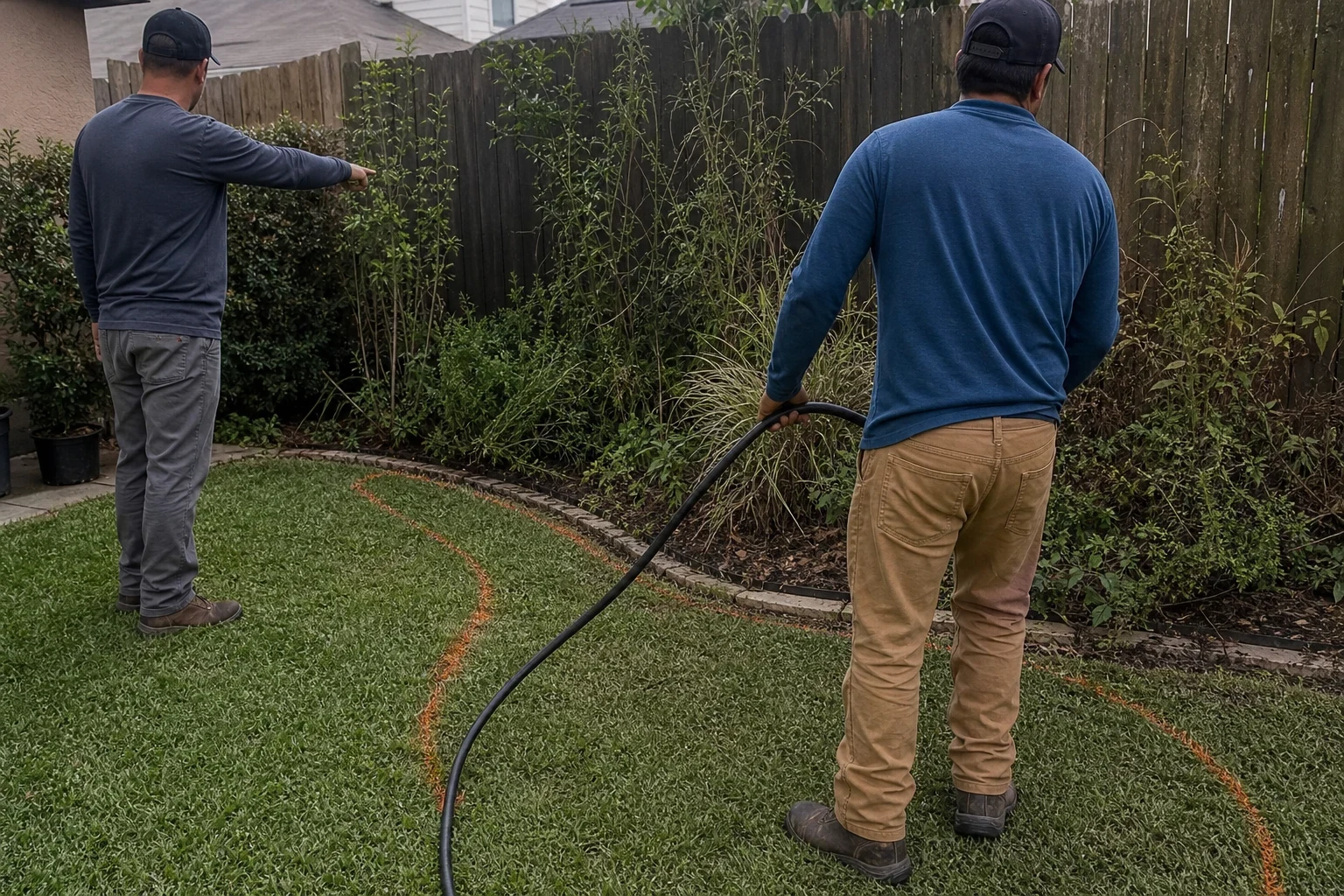
We run each zone while you watch, flag every problem head, and check pressure and coverage. You see what we see.
- 2
Explain the options
For each fix we tell you what part we would use and the cheaper or longer-lasting alternative. You get a written estimate with each item listed.
- 3
Do the work cleanly
We cut sod in neat flaps, dig narrow trenches and lay the turf back when we are done. Beds and mulch get raked back into place.
- 4
Test and set the timer
We run every zone again to confirm coverage, then program the controller for your watering days and the season. We show you how to make simple changes yourself.
Irrigation Questions We Hear
Should I repair my old system or replace it?
Most systems can be repaired. If the pipe is sound and the valves work, new heads and a reset timer are often enough. Replacement makes sense when leaks keep coming back or the zones were laid out poorly from the start. We tell you which one we see and why.
Do I need drip irrigation for my flower beds?
Not always, but it usually helps. Spray heads in beds wet the leaves and the mulch, and a lot of water is lost. Drip puts it at the roots. For a mostly lawn yard with a few shrubs, adjusted spray heads may be fine.
How long should each zone water, and how often?
There is no single number. A lawn needs more in the hot months than in winter, and a drip-fed bed runs on a different clock than turf. Water moves through sandy ground quickly, so two short cycles soak in better than one long one. Local rules also limit which days you can water. We program the controller around all of that and show you how to change it when the rainy months start or end.
Can you add sprinklers to a new lawn or new beds?
Yes. We often add zones when we do sod installation or new beds from our landscape design work. Planning the water at the same time as the plants saves digging twice.
Is there a way to pay over time for a new system?
Yes. Financing covers amounts up to $100,000, and you can pick a term anywhere from 2 to 12 years. Paying it off early carries no penalty. Bring it up when we come out to look at your zones and we will walk you through it.
Let Us Look at Your Zones
We will run your system with you, point out what is working and what is not, and explain the parts that would fix it. The estimate is free.