ServicesTree Trimming and Removal
Tree Trimming and Removal in Winter Garden
We trim and remove trees around your home based on what kind of tree it is. A laurel oak, a live oak and a pine each grow, break and decay differently, so we cut each one the way its wood calls for and clean up when we're done.
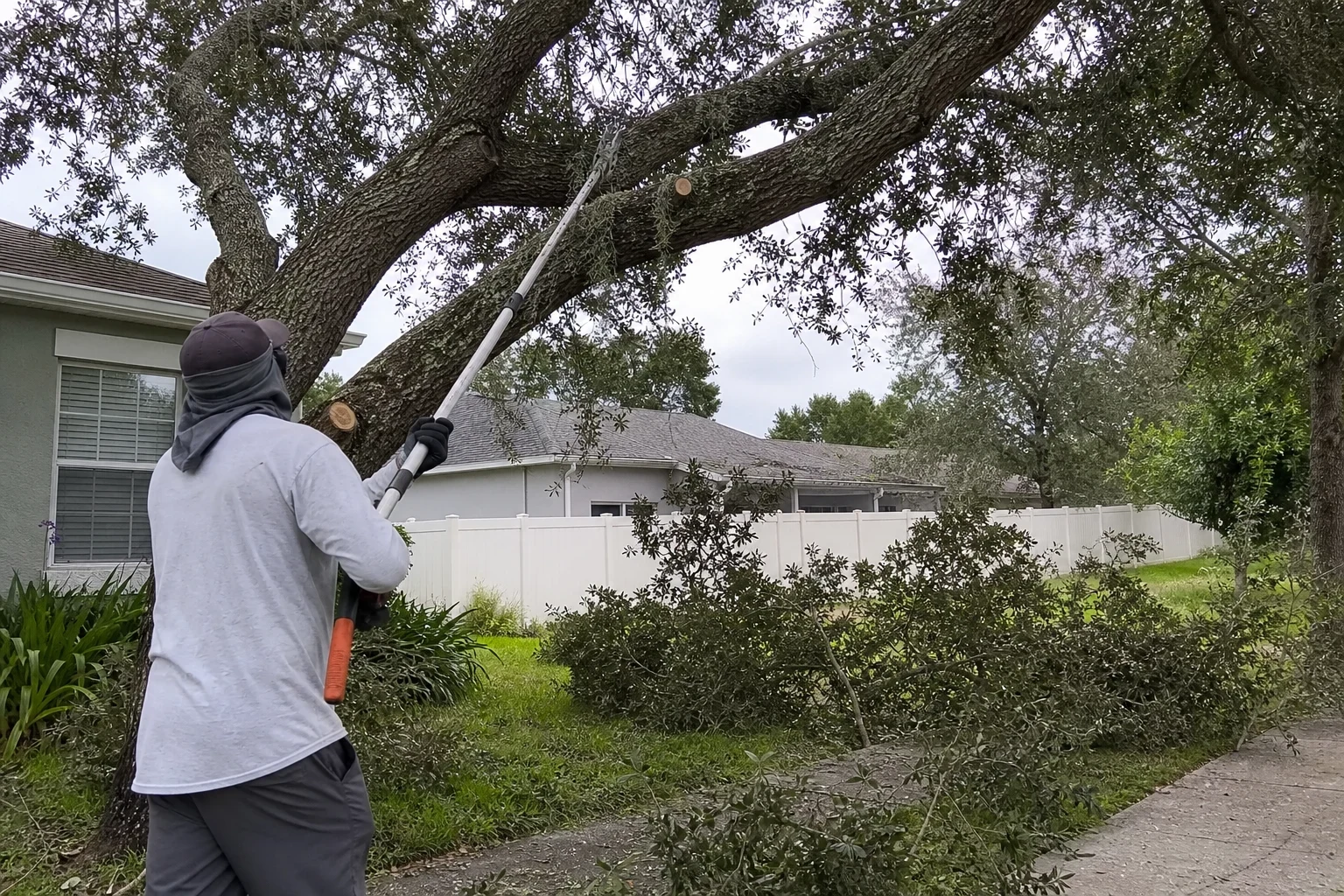
Trim it or take it down
Trimming takes out dead, weak or crowded limbs so the tree stays healthy and keeps its weight off your roof. Removal is for a tree that is dead, badly decayed or growing in the wrong spot. Most trees we look at need trimming, not removal. If that's the case, we tell you.
The species matters more than most people expect. Live oak is dense and flexible, so it holds up well in wind and only needs light thinning. Laurel and water oaks grow fast, often start to rot inside as they age, and tend to drop big limbs in summer storms. Pines shed branches when they're stressed by drought or root damage. Crape myrtles just need the right cuts, not the hard chop you see on so many streets.
We walk the tree with you, tell you what it is and what it's likely to do, and give you options. You pick.
What the work includes
Deadwood and broken limbs
We remove dead, cracked and hanging branches from the whole crown. Dead oak wood gets brittle fast in our heat and humidity, so it's the first thing to go.
Roof and driveway clearance
We cut back limbs over your roof, siding, pool screen and driveway. Branches that rub shingles or drop leaves into the screen enclosure come off at the right spot so they don't sprout back thicker.
Thinning for wind
Selective thinning lets wind pass through the canopy instead of pushing on it like a sail. We don't top trees or strip out the inner branches. Both weaken the tree and lead to more breakage later.
Removal in sections
When a tree sits close to your home, we take it down piece by piece and lower the heavy wood on ropes. Nothing gets dropped where it can hit the house, fence or lawn.
Chipping and haul-off
Brush gets chipped and the logs are cut and hauled away. If you want the chips for your garden, we can leave a pile. Our Mulch and Beds service can spread aged mulch if you'd rather have a finished look.
Signs a tree needs attention
Dead limbs in the canopy
Bare branches in summer, or bark peeling off a limb, mean that wood is dead. It will fall eventually, usually during a storm.
Mushrooms at the base
Fungus growing on the trunk or roots often means rot inside. Laurel oaks are known for this. A tree can look full on top while the base is hollow.
Splits and weak forks
A crack running down the trunk, or two main stems pinched together in a tight V, is a weak point. These are the spots that split under load.
A new lean
Some trees grow with a lean and are fine. A tree that starts leaning, with soil lifting or cracking on one side, is a different story.
Limbs touching the house
Branches resting on the roof wear down shingles, hold moisture and give squirrels a path into your attic.
How a tree job goes
- 1
Walkthrough and estimate
We meet you in the yard, look over every tree on your list and explain in plain terms what's going on with each one. The written estimate names the trees, the cuts we plan and where the wood ends up.
- 2
Permit check
Some trees need a permit before they can come down, and many neighborhoods have their own rules. We check what applies to your property before we cut.
- 3
Setup on the day
We park the chipper where it won't rut your lawn, lay down boards where we need to cross grass, and mark the drop zone. Large limbs get roped and lowered, not dropped.
- 4
Cleanup
We rake, blow off hard surfaces and pick up the small twigs too. When we leave, the only sign of the job should be the tree itself, or the open sky where it used to be.
What moves the price
Every tree job is priced after we see it. Two trees of the same height can cost very different amounts depending on where they stand and what shape they're in. Your estimate spells out each tree and each task so you know what you're paying for.
- Size and species
- Height and trunk width set how much wood comes down. Dense hardwood like live oak is heavier to handle than pine.
- Access and what's nearby
- A tree in an open yard can come down faster. One wedged between the house, a pool screen and a fence has to be taken apart in small pieces.
- Condition of the wood
- Rotten or storm-damaged trees can't always be climbed safely. That can mean more rigging or bringing in a lift.
- Debris and the stump
- Hauling everything away costs more than leaving logs for firewood. Stump grinding is a separate job, priced on its own.
Tree trimming and removal questions
Something not covered here? (407) 410-3813
When is the best time to trim trees?
For most trees, late fall through early spring works well. The trees are growing slower and it's before hurricane season starts in June. Dead or hanging limbs can come off any time of year.
Can you just top my tree to make it shorter?
We don't top trees. Topping leaves big open wounds that rot, and the tree pushes out a mess of weak shoots that break easily. We can reduce height with proper cuts back to a side branch, which keeps the tree stronger.
Do you remove the stump too?
Removal leaves the stump cut low to the ground. If you want it gone so you can plant or lay sod, our Stump Grinding service takes it below grade. We can quote both on the same visit.
Do you work on palm trees?
Yes, but palms are a different plant and need different cuts. That work is covered on our Palm Tree Pruning and Removal page.
Can I pay for a big removal over time?
Yes. A large removal or a yard full of trees can add up, so spreading the cost out is an option. We can finance jobs as large as $100,000, and you pick a term anywhere from two to twelve years. If you pay it off early, there's no penalty for that. Ask while we're putting your estimate together and we'll go over it with you.
Have a tree you're not sure about?
We'll come look at it, tell you what kind of tree it is and what it needs, and give you a written price. If it only needs a trim, that's what we'll recommend.