ServicesMulch and Beds
Mulch and Beds in Winter Garden
We clear out tired beds, cut clean edges and lay fresh mulch at the right depth. First we walk you through pine straw, pine bark, hardwood and rock, so you pick the cover that fits your yard, your budget and how much upkeep you want.
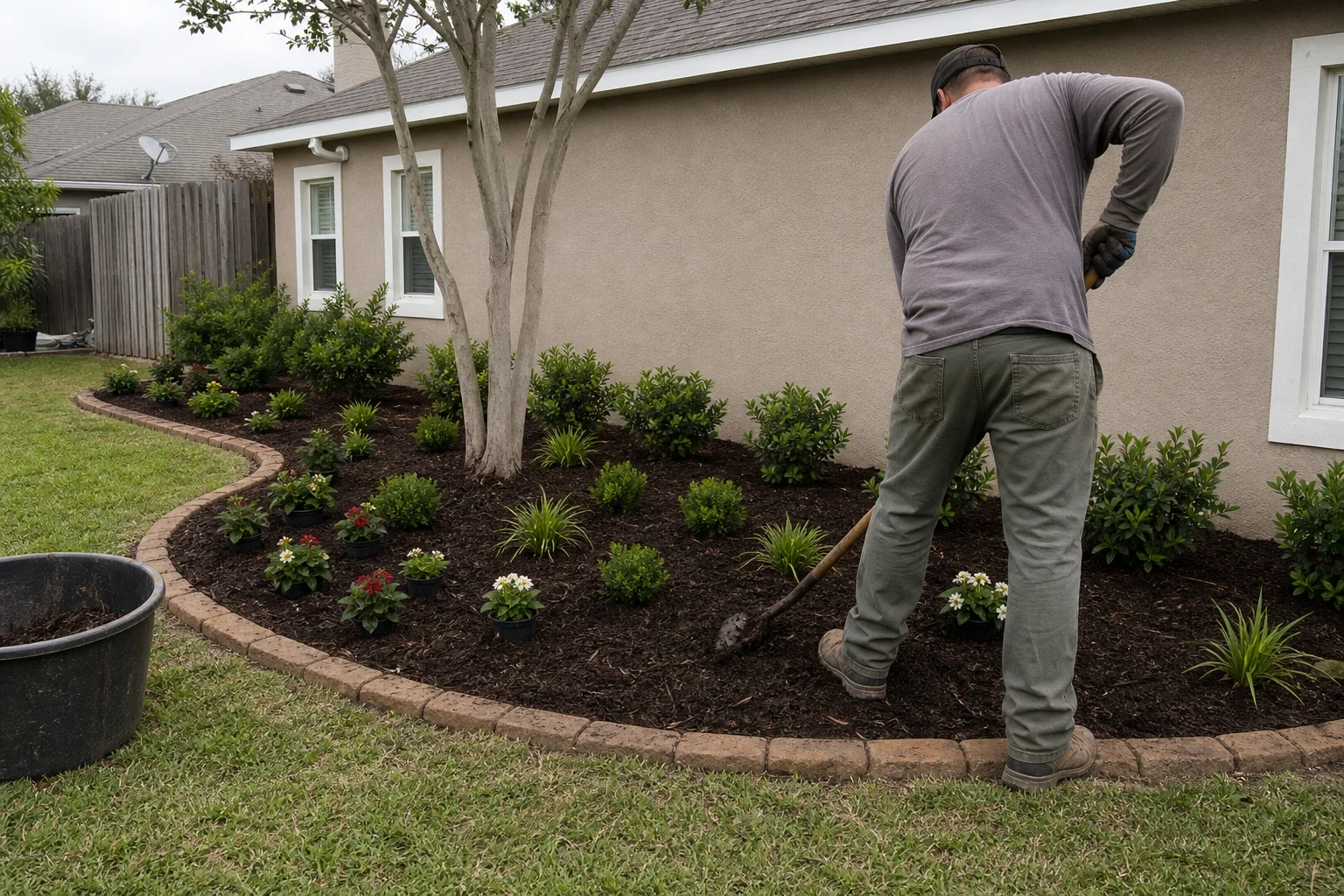
What bed work covers and when it makes sense
Beds are the soil around your shrubs, trees and foundation plants. A good layer of mulch keeps moisture in, keeps weeds down and keeps dirt from splashing onto your walls in a hard rain. When mulch thins out, those jobs stop getting done.
Most of the decision is what goes on top. Pine straw is light and quick to lay, but it breaks down fast and needs topping off more often. Pine bark nuggets last longer, though the small ones float off in heavy summer storms. Shredded hardwood knits together and stays put on slopes. Rock never needs replacing, but it holds heat and makes it harder to add plants later.
We lay out those trade-offs on the walkthrough and tell you what we would put down at our own house. If your beds just need a refresh, it is a short job. If the layout itself isn't working, our landscape design service may be the better place to start.
What a bed job includes
Weeding down to the root
We pull weeds and grass runners by hand and dig out stubborn ones like dollarweed where we can reach the roots. Mulching over live weeds only hides them for a few weeks.
Clean edges
We cut a sharp line between bed and lawn so grass stops creeping in. If you want something more permanent, we can put in metal, plastic or concrete edging and tell you how each one holds up.
Old mulch handled right
We rake out matted or moldy layers instead of piling new mulch on top. Too much buildup smothers roots and keeps water from reaching the soil.
Soil prep where it helps
The sandy soil around Winter Garden drains fast and holds few nutrients. For new beds or new plantings we work in compost so plants root faster and need less water.
Mulch at the right depth
We spread organic mulch two to three inches deep. We keep it a few inches back from trunks, stems and your siding, and we never pile it up around trees.
Cleanup before we leave
We blow off walks, the driveway and the patio, and we haul away empty bags, weeds and old mulch.
Signs your beds need work
Bare soil showing through
If you can see dirt between plants, the mulch has broken down or washed away. Bare soil dries out fast and gives weed seeds a place to land.
Mulch on the driveway after storms
Bark nuggets on the sidewalk mean the mulch is too light for that spot or the bed has no edge to hold it. A heavier cover or a raised edge fixes it.
A gray, packed crust
Old mulch fades and mats into a layer that sheds water instead of soaking it in. Your plants can dry out even with the sprinklers running. If they still look thirsty after we fix the beds, our irrigation service can check the system.
Mulch piled against the house
Mulch stacked against siding or stucco holds moisture there and gives termites an easy path. It should sit a few inches below and away from the wall.
Grass taking over the beds
When turf runners cross into beds, the edge is gone. Cutting it back now is far easier than digging out a bed full of grass next year.
How a bed job runs
- 1
Walkthrough and mulch options
We walk the beds with you, measure them and show you samples of each cover. You get a free estimate that lists the square footage, the type of mulch and the depth.
- 2
Prep
We weed, cut edges and pull out old or matted mulch. On new beds we loosen the soil and mix in compost.
- 3
Laying the mulch
We wheel the mulch in and spread it by hand so the depth stays even. We check that sprinkler heads and drip lines are still clear and not buried.
- 4
Final look and cleanup
We walk the finished beds with you if you are home, then clean every hard surface and haul off the debris.
What moves the price
We price every bed job from what we see on the walkthrough. Your estimate spells out the mulch type, the depth and the prep, so nothing shows up later that you didn't agree to. These are the things that change the number.
- Bed size and depth
- More square footage and a deeper layer take more mulch and more time. Topping off a thin layer costs less than starting from bare soil.
- Type of mulch
- Pine straw costs less to put down but gets replaced more often. Rock costs the most up front and almost nothing after. We will show you both sides so you can compare.
- Condition of the beds
- Heavy weeds, thick old mulch or grass that has moved in all add prep time before anything new goes down.
- Access
- Backyard beds behind a fence with a narrow gate mean more wheelbarrow trips than beds next to the driveway.
- Edging and extras
- Installed edging, soil amendments and new plants are priced as separate lines so you can take or leave each one.
Mulch and bed questions
Something not covered here? (407) 410-3813
How often does mulch need to be replaced?
Pine straw usually needs topping off about twice a year. Bark and shredded hardwood often last a year or a little longer before they thin out. Rock stays put, though it may need raking and a leaf blow now and then.
Does mulch attract termites?
Mulch doesn't draw termites in, but damp mulch against your walls gives them cover and moisture. That is why we keep it a few inches back from the foundation and the siding. Rock is an option along the house if you want extra space there.
Should landscape fabric go under the mulch?
Under rock, yes, because it keeps the stones from sinking into the sand and slows weeds. Under organic mulch we usually skip it. It mats up as the mulch breaks down, and roots and weeds end up growing right into it.
Is dyed red or brown mulch a good idea?
It holds its color longer than natural mulch, which some people like. The catch is that cheap dyed mulch can be made from scrap wood, so we only use product we know the source of. If you want a natural look, plain pine bark or hardwood does the job.
Can you add plants while you redo the beds?
Yes. It is the best time to do it, since the beds are already cleared and prepped. We can suggest plants that suit the sun and soil in each bed, or plan a bigger change through our landscape design service.
Get your beds looking right again
Tell us what your beds look like now and what you want. We will come out, walk them with you and talk through the materials before you decide anything.