ServicesStump Grinding
Stump Grinding in Winter Garden
We grind old stumps down below the soil line so you can mow, plant or lay sod right over the spot. Before we start, we talk through what goes back in the hole, because wood chips, topsoil and sod each behave differently once the job is done.
What Stump Grinding Does and When It Makes Sense
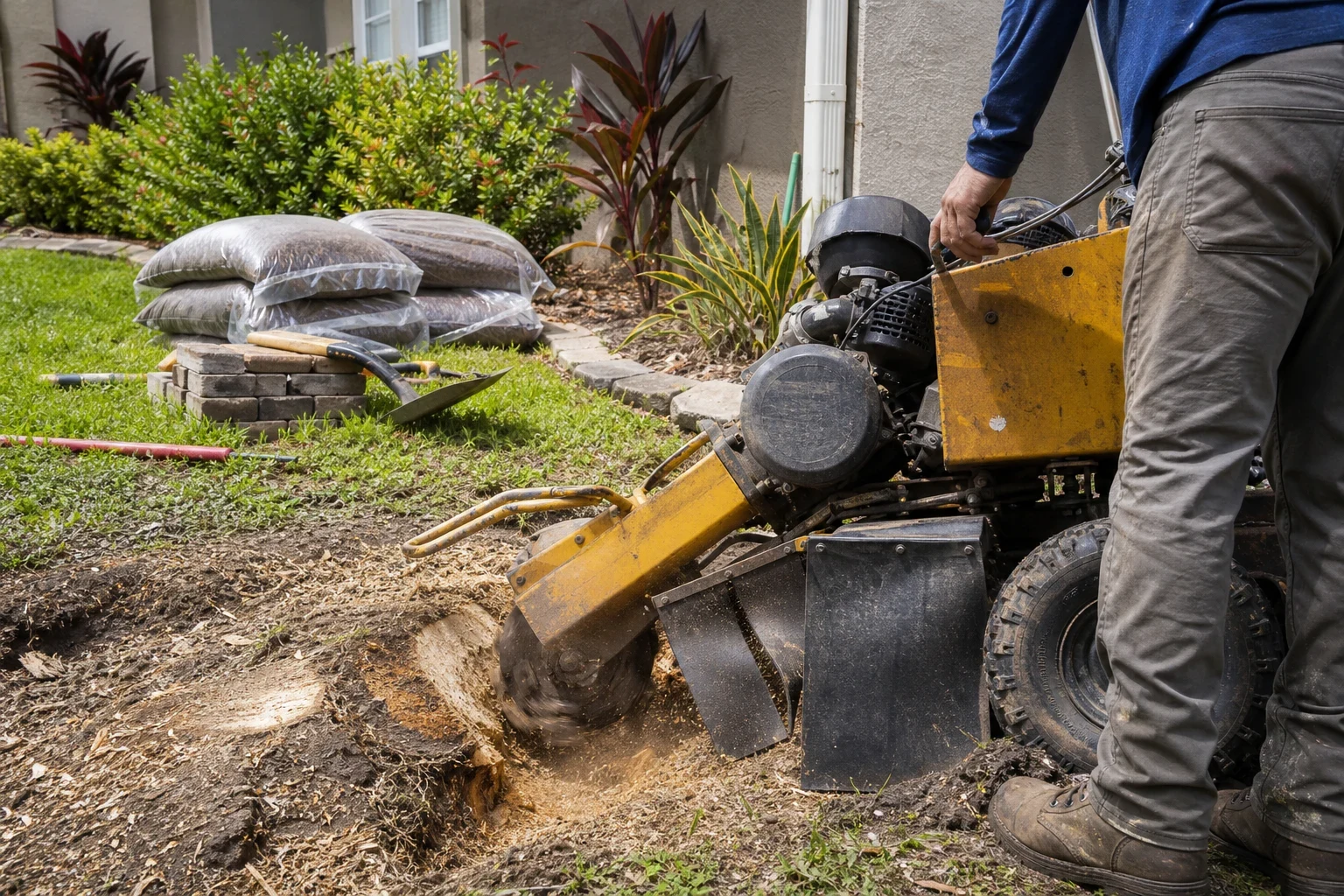
A stump grinder is a machine with a spinning wheel of carbide teeth. It chews the stump into chips a little at a time, down past the surface. Nothing gets pulled out, so your lawn, beds and driveway edge stay mostly as they are.
Grinding is the right call for most stumps around your home. Full stump removal digs out the whole root ball. That leaves a big crater and tears up the yard, and it's rarely needed unless you're pouring a slab or setting footings in that exact spot.
The real choice is what happens after. A ground stump leaves a pile of chips and a soft hole. You can keep the chips, swap them for soil, or prep the spot for new grass. We'll explain each one plainly so you pick what fits the space.
What's Included When We Grind a Stump
- Utility locate before we dig
- We have underground lines marked before the grinder touches the ground. Irrigation lines aren't covered by the locate, so we ask where your zones run and flag the heads near the stump.
- Grinding below grade
- We grind to a depth that fits your plans. Most spots going back to lawn get ground well below the soil line. If you want a tree or shrub in the same place, we go deeper and wider.
- Surface roots near the stump
- Big roots running across the top of the lawn trip mowers and people. We grind the ones close to the stump that sit at or above the surface so the area lies flat.
- Backfill with your choice of material
- We can rake the grindings back into the hole, haul them off and bring in screened topsoil, or mix the two. Each has trade-offs, and we cover them in the estimate.
- Cleanup of chips and debris
- Grinding throws chips across nearby grass and beds. We rake and blow them back so your yard isn't left speckled with sawdust.
Signs It's Time to Grind That Stump
Mushrooms or soft, crumbly wood
A rotting stump feeds fungus. Once the wood goes soft, it can draw termites, which is a real concern in Florida's warm, damp soil.
New sprouts keep coming up
Some trees, like laurel oaks and camphor, push suckers from the stump and roots for years. Grinding the stump stops most of that regrowth.
You mow around it every week
If you're steering the mower around a stump or hitting it with the trimmer line, it's costing you time and blades.
You want the space back
A new bed, a patio or a fresh strip of sod can't go in until the stump is gone. Grinding clears the way for the next project.
It's a trip hazard
Low stumps hidden in grass catch toes, especially where kids play or guests walk at night.
What Moves the Price of Stump Grinding
Every stump is a little different, so we price after we see it. The biggest factors are size, wood type and what's around it. If the stump is one piece of a larger yard project, you can spread out the cost: we finance amounts as high as $100,000, with terms anywhere from two to twelve years and no penalty if you pay it off early.
Diameter and height
We measure across the widest point at ground level. Wider stumps take more grinding time and make more chips to deal with.
Wood type and condition
Hard, sound oak grinds slower than soft pine or a stump that's already rotting. Palm stumps are fibrous and stringy, which grinds differently than hardwood.
Access to the stump
A stump in an open front yard is easy. One behind a narrow fence gate, next to a pool cage or tight against the house may need a smaller machine and more time.
Depth and root work
Grinding deeper for a new tree, or chasing a lot of surface roots, adds time beyond a standard grind.
Backfill and haul-off
Leaving the grindings costs least. Hauling them away and bringing in topsoil adds material and labor, but gives you a firmer base for sod.
How a Stump Grinding Job Goes
- 1
Free walkthrough and estimate
We come out, measure the stump, look at access and ask what you want in that spot next. You get a clear price before any work is scheduled.
- 2
Lines marked and site prepped
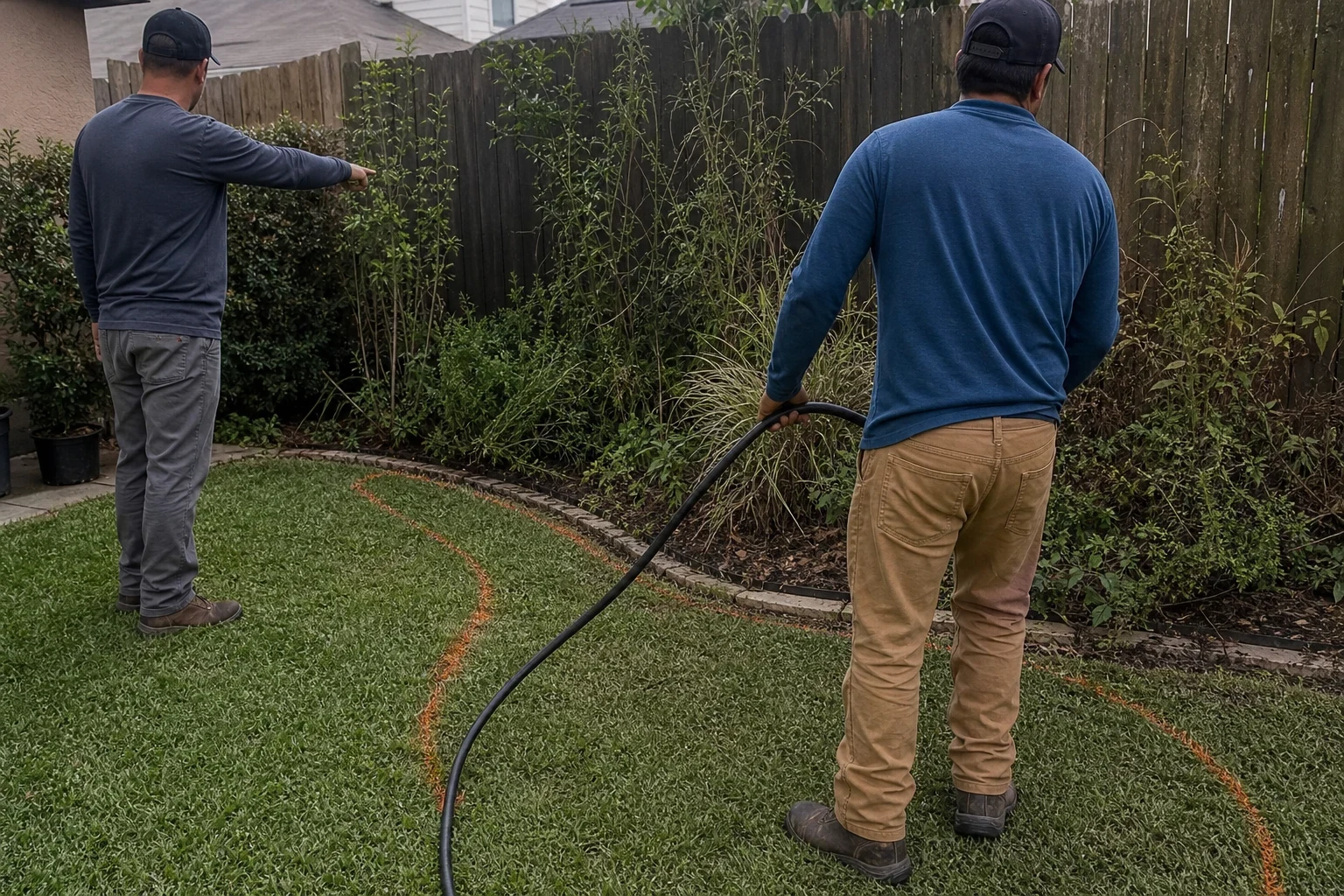
Utilities get marked ahead of the job day. On the day, we set out shields to keep chips off windows, cars and pool screens.
- 3
Grinding the stump and roots
A single average stump usually goes quickly. Large oaks or clusters take longer. We grind side to side until we reach the depth we agreed on.
- 4
Filling and leveling
We backfill with the material you chose and tamp it down. Chips and loose soil settle over the next few weeks, so we mound the spot slightly to allow for that.
- 5
Cleanup and a walk-around
We clean up the work area and walk it with you, so you know what to expect as the fill settles.
Stump Grinding Questions
Should I keep the grindings or replace them with topsoil?
It depends on what goes there next. Wood chips work fine under mulch beds and break down over time. But as they rot they pull nitrogen from the soil and the spot sinks, so grass planted right over them often struggles. For sod, we usually recommend hauling most of the chips and filling with topsoil.
Can I plant new sod right over the spot?
Yes, once the hole is filled with soil and leveled. Give the fill a little time to settle, or have us mound it slightly first. Our sod installation crew can lay the new grass as part of the same project.
Will the roots keep growing after you grind?
Most trees won't come back once the stump is ground below grade. A few species will throw sprouts from leftover roots for a season or two. Cutting those back as they appear usually ends it.
Do palm stumps need grinding?
They can. Palms don't spread wide roots like an oak, but the stump stays hard for a long time. Grinding gets it below the surface so you can plant or sod over it. If the palm is still standing, see our palm tree pruning and removal page.
Will the grinder damage my lawn or sprinklers?
The machine leaves some tire marks and a patch of disturbed soil around the stump, which recovers. We mark sprinkler heads and lines you show us and work around them. If a line runs right under the stump, we'll tell you before we grind.
Ready to Get That Stump Out of the Way?
We'll come look at it, measure it and talk through the fill options for your yard. You'll know the price before we schedule anything.